Network Routing Behavior Analysis & Validation File – 9047301368, 6036075554, 4163012661, 4694663041, 8327064654

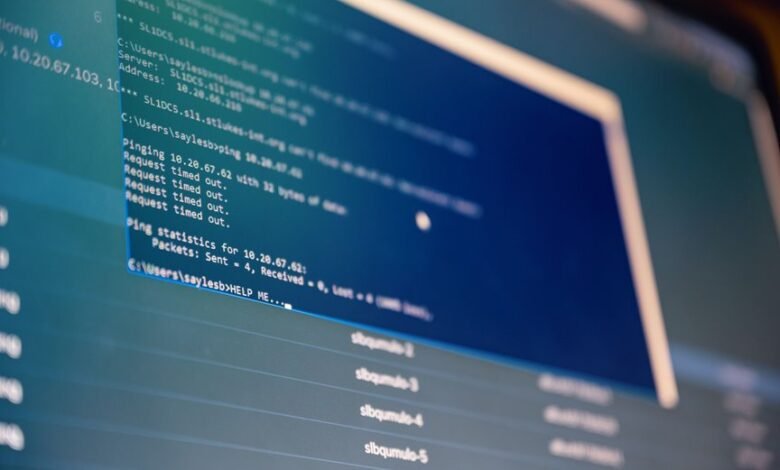
The Network Routing Behavior Analysis & Validation File consolidates traces, models, and policy semantics to document routing decisions. It emphasizes reproducible workflows, convergence behavior, failover dynamics, and policy compliance across topology and devices. The approach aims for measurable latency and stability while supporting robust validation. By outlining modular scripts and repeatable steps, it sets a foundation for disciplined verification. The implications for real networks hint at practical considerations that warrant closer examination.
What Is Routing Behavior and Why It Matters
Routing behavior refers to how network traffic is directed from sources to destinations under a given set of rules and conditions. It is analyzed through routing semantics, revealing how policies shape decisions. Path bifurcation examines alternative routes, while policy granularity measures rule specificity. Route demographics describe traffic patterns, informing validation efforts and freedom to optimize performance, reliability, and policy alignment.
Collecting Traces and Modeling Route Decisions
Collecting traces and modeling route decisions involves systematically capturing the events that trigger path selection and subsequent forwarding actions, then translating those events into formal representations of routing choices.
The process analyzes routing dynamics, documenting triggers, state changes, and decision points.
It emphasizes policy semantics, enabling precise interpretation, reproducibility, and disciplined inquiry into how networks resolve and implement routes.
Validating Convergence, Failover, and Policy Compliance
Validating convergence, failover, and policy compliance requires a rigorous examination of network behavior under changing conditions. The assessment isolates convergence timing, failover determinism, and policy enforcement across routes, links, and devices. Structured metrics capture latency analysis and stability signals, while anomaly detection flags deviations from expected patterns. Findings inform adjustments, ensuring predictable routing behavior and aligned operational goals.
Build Repeatable Workflows for Real-World Networks
Creating repeatable workflows for real-world networks requires a disciplined approach to process design, data collection, and automation. The framework emphasizes repeatable tests, modular scripts, and clear provenance to support scalable routing behavior analysis. Each cycle integrates measurement, validation, and documentation, enabling rapid replication. This discipline underpins transparent decision making and robust network validation across diverse environments, maintaining freedom through consistent, verifiable results.
Frequently Asked Questions
How Often Should Routing Traces Be Updated for Accuracy?
Update cadence should be determined by data governance guidelines, balancing freshness and stability; they update routing traces regularly enough to reflect risk-free changes while avoiding noise, ensuring actionable accuracy and auditable traceability for independent review.
What Tools Reliably Detect Micro-Flaps in Routing?
Tools that reliably detect micro-flaps include network probes and continuous monitoring platforms performing routing validation, topology inference, traffic auditing, and anomaly detection; they quantify instability, correlate events, and trigger alerts for rapid fault isolation and remediation.
How to Measure Convergence Time in Multi-Domain Networks?
Convergence timing is measured by tracking route update intervals and stabilization points, revealing routing stability under changing topologies. The method uses precise timestamps and controlled probing to quantify convergence speed, ensuring accurate, repeatable observations despite freedom-loving network behavior.
Which Metrics Best Indicate Policy Violations in Real Time?
Policy violations are best indicated by Real time indicators showing Routing anomalies, with Compliance monitoring highlighting deviations. The approach emphasizes immediate detection, structured metrics, and analytical thresholds, enabling informed scrutiny and swift corrective action for freedom-minded operators.
How to Secure Trace Data During Collection and Analysis?
In a quiet allegory, secure tracing safeguards the lantern; data integrity governs every spark. The analyst curates traces, encrypts at collection, preserves hashes, and restricts access, ensuring secure tracing and data integrity throughout analysis.
Conclusion
In essence, routing behavior is the network’s heartbeat, measured through traces and models rather than guesses. By dissecting decision points with rigorous structure, teams transform complexity into reproducible insight. Convergence, failover, and policy compliance become testable hypotheses, not mystic outcomes. The resulting workflows enshrine predictability, resilience, and operational alignment, illuminating latency and stability as guiding stars. When the map and the terrain align, networks navigate with disciplined confidence, delivering robust, real-world reliability.